
Septic Tank Pumping in Fort Pierce, FL
Professional septic tank pumping services for homeowners and property owners in Fort Pierce and surrounding communities in St. Lucie County.
What Is Septic Tank Pumping?
Septic tank pumping is the process of removing the accumulated solids, sludge, and scum that build up inside a septic tank over time. All septic tanks accumulate these materials as wastewater from the home enters the tank. The liquid portion of the wastewater flows out to the drain field, but solid materials remain in the tank.
Over time, the layer of solids at the bottom of the tank and the scum layer at the top grow. If the tank is not pumped periodically, these accumulated materials can reach levels that reduce the tank's capacity, impair its function, or allow solids to flow out into the drain field — which can cause significant damage to the drain field and the overall system.
Pumping the tank removes these accumulated materials and restores the available capacity in the tank. It is one of the most important routine maintenance tasks for a septic system.
Why Septic Tanks Need to Be Pumped
Septic tanks are designed to separate solids from wastewater, but they are not designed to eliminate those solids. Bacteria in the tank break down some of the organic material, but a significant portion remains as sludge and scum. Without periodic pumping, this material accumulates until it causes problems.
When solids overflow into the drain field, they can clog the soil pores that allow effluent to percolate. This can lead to drain field failure, which is a much more serious and costly problem than routine pumping. Regular pumping is one of the best ways to protect the drain field and extend the life of the overall septic system.
Need Septic Tank Service?
Contact Ashton Septic Services to discuss your septic pumping needs in Fort Pierce and St. Lucie County.
Signs Your Septic Tank May Need Service
While a septic tank can sometimes be full without obvious symptoms, there are several signs that may indicate your system needs attention. If you are experiencing any of the following, contact Ashton Septic Services to discuss scheduling a service evaluation.
- Slow drains throughout the home (not just one fixture)
- Gurgling sounds in toilets or drains
- Sewage odors inside or near the tank area
- Sewage backing up into sinks, toilets, or bathtubs
- Standing water or unusually wet areas near the drain field
- Unusually lush or green grass over the drain field area
- It has been several years since the last pumping service
- You are purchasing or selling a property with a septic system
Important: Some of these symptoms can have multiple causes. Slow drains, for example, may be caused by a full tank, a blockage, or a drain field issue. A professional evaluation helps determine the actual cause and appropriate response.
How Septic Tank Pumping Works
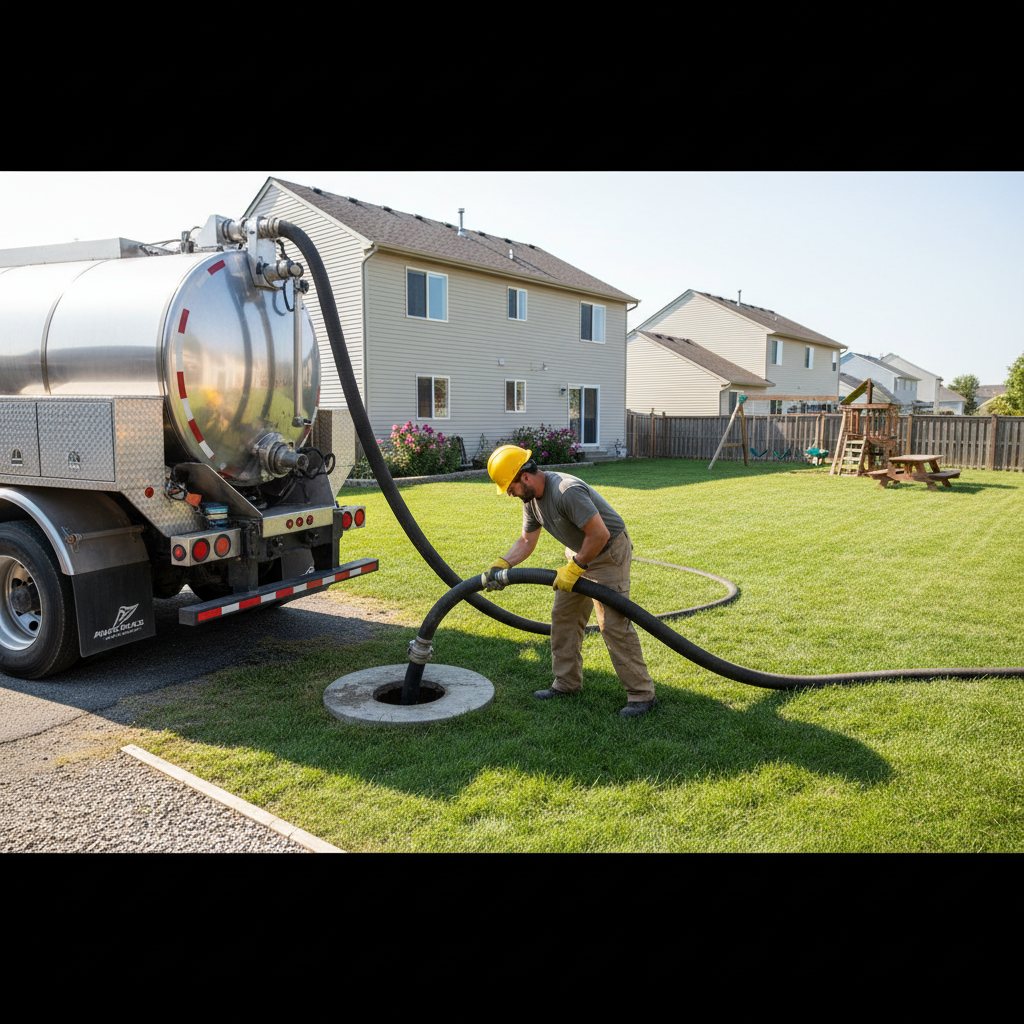
Septic tank pumping involves using a vacuum truck to remove the contents of the tank through the access opening. The technician accesses the tank via the manhole cover or access port, inserts the vacuum hose, and removes the accumulated solids and liquid contents of the tank.
During a service visit, the technician may also evaluate accessible components of the system and note any observations about the condition of the tank. If any concerns are observed, these should be discussed with the customer.
The pumped material is transported for proper disposal at an approved facility. After pumping, the tank refills naturally with wastewater from the home over time.
What Happens During a Typical Service Visit
How Often Should a Septic Tank Be Pumped?
There is no single pumping schedule that applies to every property. Pumping frequency depends on a combination of factors specific to your home and system. A professional evaluation can help determine an appropriate schedule for your situation.
Household Size
More people using a septic system means more wastewater entering the tank. Larger households typically require more frequent pumping than smaller ones.
Tank Size
Smaller tanks fill up more quickly than larger ones. The size of your tank relative to your household's water usage is an important factor.
Water Usage Patterns
High water usage — from laundry, long showers, or other sources — adds more liquid to the system and can affect how quickly solids accumulate.
Garbage Disposal Use
Using a garbage disposal connected to a septic system adds food solids to the tank, which can increase the rate at which the tank fills.
System Design
The design of the septic system, including whether it has a single tank, multiple compartments, or other components, can affect maintenance needs.
System Age and Condition
Older systems or systems with existing issues may require more attention. A professional evaluation can help assess the current condition of your system.
Not Sure When Your Tank Was Last Pumped?
If you do not know when your septic tank was last serviced, or if you have recently purchased a property and are unsure of the maintenance history, contact Ashton Septic Services to discuss scheduling an evaluation. We can help you understand the current condition of your system.
Preparing Your Property for Septic Service
A few simple steps before your septic service appointment can help the visit go smoothly. Here is what you can do to prepare:
- Know the approximate location of your septic tank and any access points on the property.
- Clear any vehicles, equipment, or obstacles from the area around the tank access.
- If you have pets, secure them during the service visit.
- Have any previous service records available if possible.
- Note any symptoms or concerns you want to discuss with the technician.
- Ensure the access point to the tank is reasonably accessible.
If you have questions about how to prepare for your specific service appointment, contact Ashton Septic Services when you schedule and we can provide guidance.
Why Regular Maintenance Matters
Regular septic maintenance, including periodic pumping, is one of the most effective ways to protect your septic system investment. A septic system that is properly maintained can function effectively for many years. A system that is neglected can develop problems that are significantly more costly to address.
The drain field is particularly vulnerable to damage from a neglected septic tank. When solids overflow from an un-pumped tank into the drain field, they can clog the soil and cause the drain field to fail. Drain field repair or replacement can be a major expense compared to the cost of routine pumping.
Keeping records of your septic service history is also valuable. Knowing when the tank was last pumped, what was observed during service, and any recommendations made by the technician can help you make informed decisions about your system.
Common Septic Pumping Questions
Here are answers to some of the questions property owners commonly ask about septic tank pumping.
Can I be home during the service?
Yes. In fact, it can be helpful for you to be available during the service visit so the technician can discuss any observations or questions with you directly.
How long does pumping typically take?
The time required can vary depending on the size of the tank, the amount of material to be removed, and access conditions. Contact us if you have specific scheduling needs.
Will my drains work right after pumping?
After pumping, the tank will be empty and will refill as wastewater enters from the home. Drains should function normally following service, assuming the issue was related to the tank.
What if the technician finds a problem?
If the technician observes a concern during the service visit, they will discuss it with you. We aim to explain what was found and what options may be appropriate.
Do I need to do anything after pumping?
After pumping, the septic system should resume normal operation. The tank will refill naturally. It is a good time to note the date of service for your records.
What if I cannot locate my septic tank?
If you are unsure where your septic tank is located, contact us when you schedule service. We can discuss options for locating the tank at your property.
Have more questions? Visit our full FAQ page or contact us directly.
Need Septic Tank Service?
Contact Ashton Septic Services today to discuss your septic pumping needs in Fort Pierce and St. Lucie County, Florida.